Congratulations to James Osborne on his recent promotion to Professor
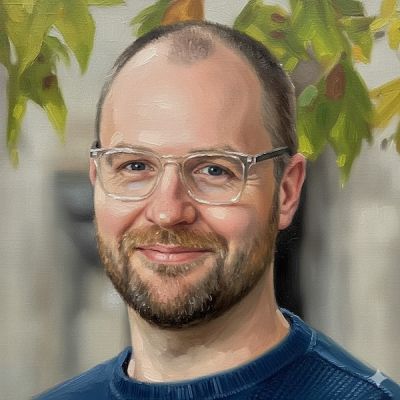
Professor James Osborne is an ARC Future Fellow and Professor of Applied Mathematics, based in the School of Mathematics and Statistics.
James has always had an interest in mathematics, and in 2020 went to New College Oxford to undertake an undergraduate MMath in mathematics. Following this, looking for ways to apply mathematics to real world problems, James started a DPhil at the Life Sciences Interface Doctoral Training Centre at the University of Oxford and undertook his research in the Computational Biology Group in “Numerical and Computational Methods for Simulating Multiphase Models of Tissue Growth”.
From 2008-2013 James continued in the Computational Biology Group, looking at “Computational Approaches to Multiscale Modelling in Systems Biology”. In 2009 James returned to the Doctoral Training Center as an Associate Director splitting his time between research and the Doctoral Training Centre. During 2013 and 2014 James was seconded to Microsoft Research Cambridge as part of the Biological Computation Group.
In January 2015 James relocated to Australia, and the University of Melbourne, to take up a role as Lecturer in Applied Mathematics at the School of Mathematics and Statistics. Since relocating to Melbourne James has helped establish the Melbourne Mathematical Biology group and has held numerous positions in the school and faculty, leading curriculum change, including his current role as Assistant Dean of Graduate Education in the Faculty of Science.
James’ research is at the interface between applied mathematics, scientific computing, and biology: he uses mathematical and scientific computing techniques to develop reliable, robust and efficient simulations of multiscale biological and physiological phenomena. His research portfolio includes over $3 million of competitive funding and over 70 peer-reviewed publications, reflecting significant contributions to theoretical developments and interdisciplinary collaborations, with leading experimental groups, worldwide.
James is a passionate educator, dedicated to mentoring the next generation of scientists, evidenced by his supervision of over 46 research students (PhD, MSc and equivalent) to completion and multiple early-career researchers, many of whom have progressed to prominent academic and research positions globally.