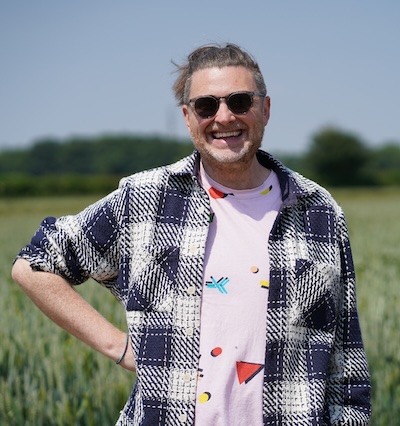
Three questions for Noon
What has your career looked like to date?
I started programming while still finishing my TAFE degree coming out of high school. I worked as a programmer for 6 years before returning to university to complete an undergraduate degree in physics and then a master’s degree in maths at Melbourne University.
During my degree I got extremely excited about the field of quantum computing which combined maths, physics, and programming in a very interesting way. In one way or the other I participated in this community for several years, through open-source work, personal interest projects, and eventually a short time working in the space, albeit briefly.
Since university I worked mostly in the AI space, eventually establishing my own company to teach deep learning. Covid, in part, led to me having to close the doors. I ended up finding my way to Edinburgh in the UK.
What do you do in your current position?
Over the years, I've become more and more concerned about the climate and associated crises and am now very lucky to be working for a company that works with farmers and agronomists to understand how soil biology impacts crop health. As Chief Technical Officer, my role is to build the software engineering practice around this central capacity, including the machine learning capabilities.
How has your mathematics/statistics training been useful in your career?
Aside from the natural statistical aspect, maths factors into my work through the programming languages we use - Haskell and PureScript. These languages (famously) connect through to category theory in ways that tend to be far more practical than the amateur practitioner of those fields would expect.
Find out more
Our graduates go on to many and varied careers working in fields as diverse as research, banking, commerce, mining, healthcare, software, logistics and market research. Find out more about the possibilities and access resources to help you get there.