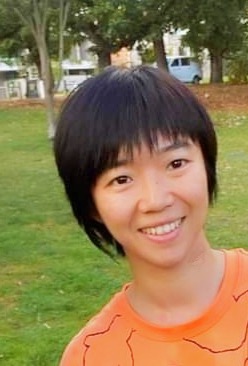
Dr Wei Huang is a Senior Lecturer at the School of Mathematics and Statistics. Her professional objective is to decipher the intricacies of our world through data analysis. Her primary focus lies in causal inference, where she delves beyond mere correlations to uncover the true driving forces behind various phenomena. If you just look for superficial correlations in data, you can get wrong conclusions. That’s why Wei tries to reveal deeper insights into the underlying causes.
Wei's website: https://sites.google.com/view/w-huang
What was your relationship with maths and stats like in school?
I always quite liked maths and was quite good at maths from a young age. It was like a game to me, doing maths meant just having some fun!
What did you do to get from school to where you are today?
I studied Risk Management Science at university at first, as I was encouraged to use my mathematics skills in financial area, but then I found out that I don’t like finance. I realised that doing statistics was more what I wanted, so I changed my focus to mathematical statistics research.
What is the best/worst thing about working in maths and stats?
The worst thing... The fear of running out of ideas. If I was working for a company, I probably wouldn’t worry about my own creativity. The best thing is the flexibility, you’re really your own boss. You can work on what you’re interested in and work with people that you like!
What does a typical day as a mathematician/statistician look like?
Every day is different. My job is split into three parts, 40% teaching, 40% research and 20% service. My teaching at university includes preparing teaching materials and writing exam papers. I learn a lot from teaching too because I’m always looking for more intuitive ways to explain the reasoning behind mathematics. My service work includes coordinating the vacation scholarship program for mathematics and statistics students. My research work can include finding an interesting research topic, formulating research questions, reading about it, solving it, talking to others about it, and even travelling!
Can you tell us about your opportunities to travel as part of your work in mathematics and statistics?
Last year I went on a 6-week trip to visit three universities in the United States, including Yale, with the aim of meeting other statisticians and starting new collaborations with them. It was great, I’d go into a department knowing one person and leave knowing 10 people!